Students and young scientists studied the ichthyofauna of the Kaliningrad Bay
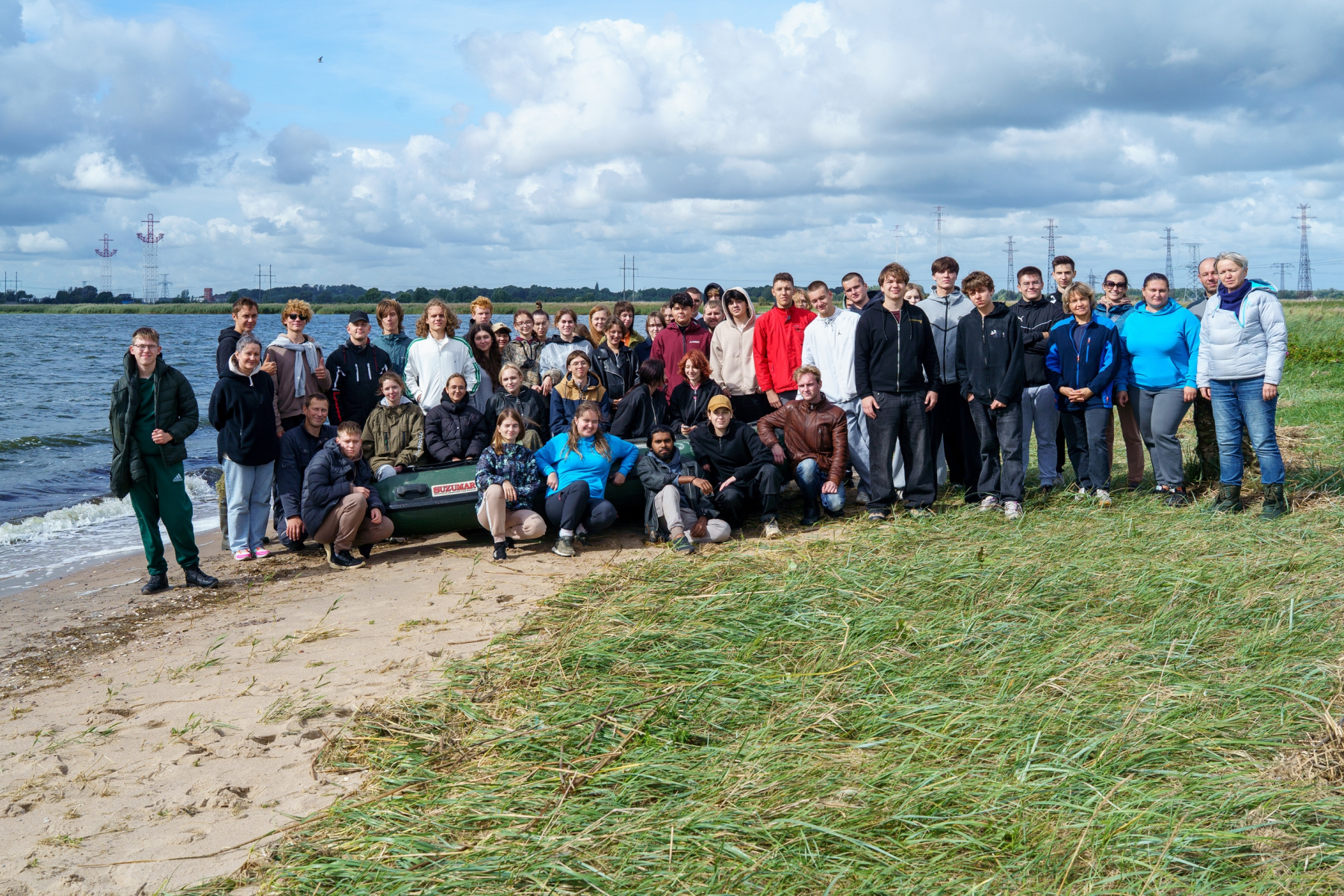
Students of the Water Bioresources and Aquaculture and Ecology and Natural Resource Management programmes spent the first few days of the academic year on the shores of the Kaliningrad Bay (Vistula Lagoon).
Kaliningrad State Technical University arranges such expeditions for first-year students as an initiation into their future profession. The staff of the Institute of Fisheries and Aquaculture organised this annual traditional event in collaboration with the KSTU Student Scientific Society.
Real-life field research awaited the future ichthyologists and ecologists. During the sessions, the students learnt about the specifics of ichthyological, hydrochemical, hydrobiological and ecological observations!
The first-year students, divided into groups, took water samples and studied plankton and benthic ecosystems (fish forage base). The students investigated aquatic plants and their roles in the ecosystem. The main focus of these sessions was studying the characteristics of the ichthyofauna of the Kaliningrad Bay.
During the field session on aquatic ecosystems, the students studied the species composition of the ichthyofauna and assessed biological parameters. To do this, they learnt to use such important fishing gear as a seine, a fry dragnet and a drag seine. As a result of their fishing efforts, the students had a good catch, which also required scientific processing: measuring the length of each fish, determining its weight, sex, degree of fatness and stomach content, and collecting samples to determine its age.
Lecturers from the department, who were nearby, taught the students how to carry out mass measurements of the catch correctly and conduct a full biological analysis of the fish. The young people also received information about aquatic ecosystems, their species, size-and-weight, and sex composition, as well as maturity stages.
This year’s first research catch was diverse in terms of species—the first-year students encountered fish such as roach, bleak, bream, pikeperch, and three-spined stickleback.
In keeping with an old fishing tradition, let us wish our students tight lines.
The event took place as part of a grant aimed at supporting student scientific societies.