KSTU students conducted experiments with a small-scale unmanned trawling catamaran model in open water
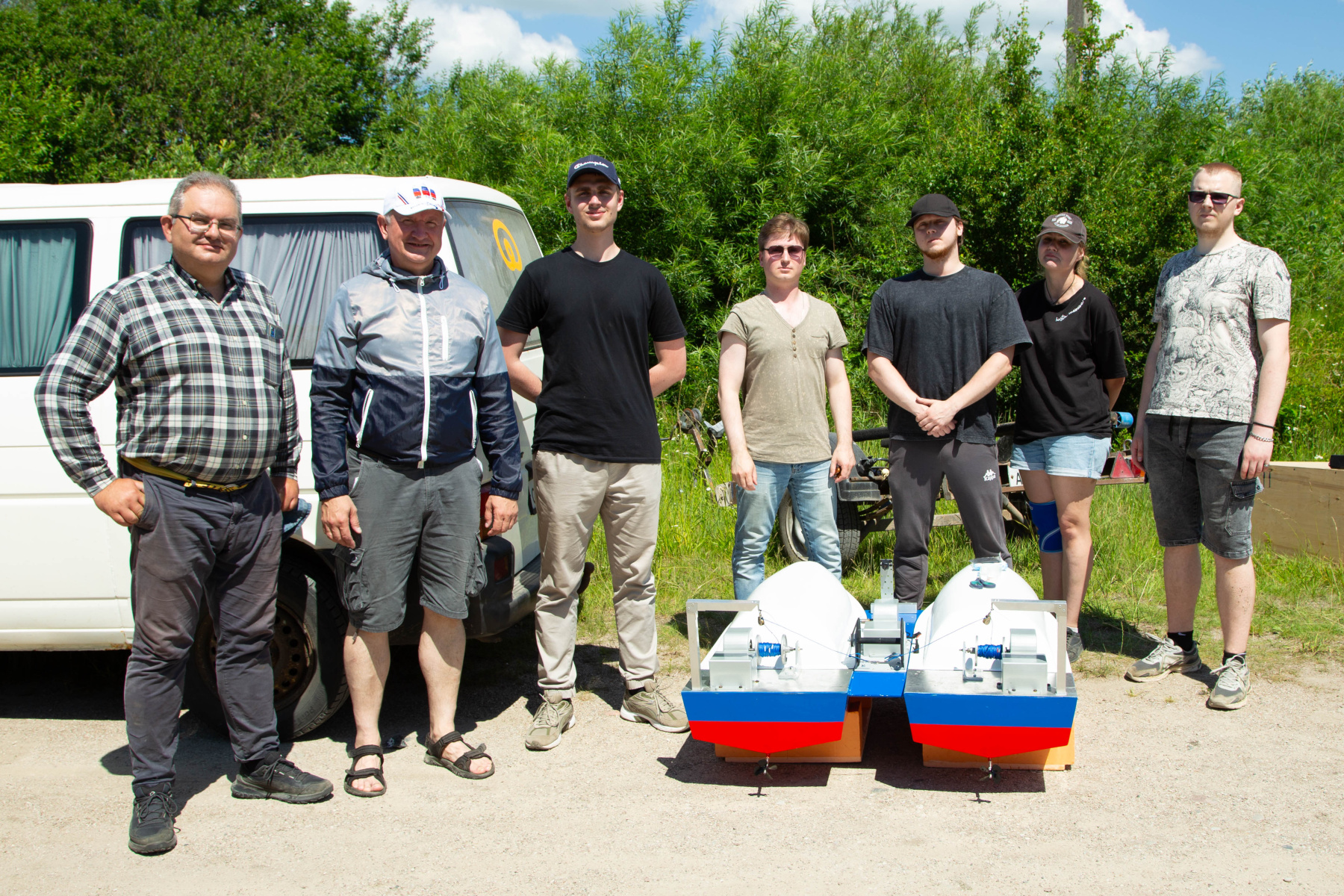
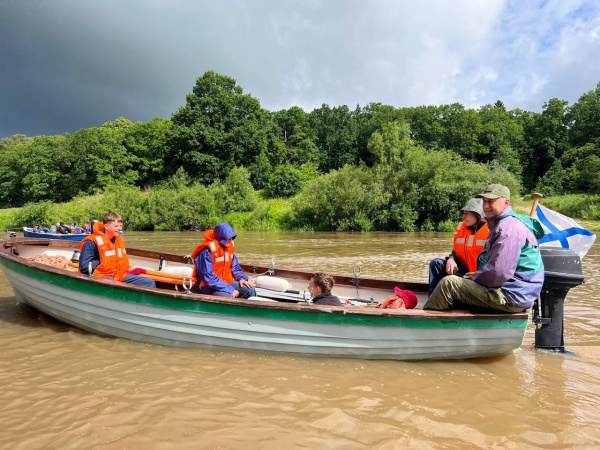
Young scientists and students from the Commercial Fishery Department, under the guidance of the Department Head A.A. Nedostup, conducted field experiments with a model of a small-scale unmanned trawling catamaran. The tests took place at a quarry on the Pregolya River in the Gvardeysky District.
The model of the small-scale unmanned trawling catamaran is equipped with electric motors with lithium-ion batteries, as well as electric wire winches and a rope and net drum. During the experiments, the department team, together with O.A. Novozhilov, Director of the Institute of Fisheries and Aquaculture, practised wireless control of the catamaran in conjunction with a model of a pelagic trawl made of high-molecular-weight polyethylene. K. Menschikov, a master's student at the Commercial Fishery Department, designed and manufactured the trawl model and the installed trawl doors were made by A. Pivovarov, a bachelor's student.
The experiments demonstrated the excellent seaworthiness of the small-scale unmanned trawling catamaran when moving with a trawl. The trawl had no cod end, so the goal was not to catch fish. However, the echo sounder installed on the catamaran showed the active presence of the fishery resources. A camera installed on the catamaran made it possible to track the length of the wires and their angle.
The experiments are being conducted as part of the state task Development of a Wireless Trawl Parameter Monitoring System with Artificial Intelligence Elements Autotrawl. The design and manufacture of the catamaran hull were carried out by the Commercial Fishery Department in close collaboration with the Scientific and Educational Centre of Shipbuilding, Maritime Infrastructure and Equipment at KSTU.
The next stages of the project include installing fishing gear parameter sensors, upgrading the model of the small-scale unmanned trawling catamaran control system for autonomous navigation, and controlling the trawl system with artificial intelligence elements.
The model of the small-scale unmanned trawling catamaran is equipped with electric motors with lithium-ion batteries, as well as electric wire winches and a rope and net drum. During the experiments, the department team, together with O.A. Novozhilov, Director of the Institute of Fisheries and Aquaculture, practised wireless control of the catamaran in conjunction with a model of a pelagic trawl made of high-molecular-weight polyethylene. K. Menschikov, a master's student at the Commercial Fishery Department, designed and manufactured the trawl model and the installed trawl doors were made by A. Pivovarov, a bachelor's student.
The experiments demonstrated the excellent seaworthiness of the small-scale unmanned trawling catamaran when moving with a trawl. The trawl had no cod end, so the goal was not to catch fish. However, the echo sounder installed on the catamaran showed the active presence of the fishery resources. A camera installed on the catamaran made it possible to track the length of the wires and their angle.
The experiments are being conducted as part of the state task Development of a Wireless Trawl Parameter Monitoring System with Artificial Intelligence Elements Autotrawl. The design and manufacture of the catamaran hull were carried out by the Commercial Fishery Department in close collaboration with the Scientific and Educational Centre of Shipbuilding, Maritime Infrastructure and Equipment at KSTU.
The next stages of the project include installing fishing gear parameter sensors, upgrading the model of the small-scale unmanned trawling catamaran control system for autonomous navigation, and controlling the trawl system with artificial intelligence elements.