The Governor of the Kaliningrad Region paid a working visit to KSTU
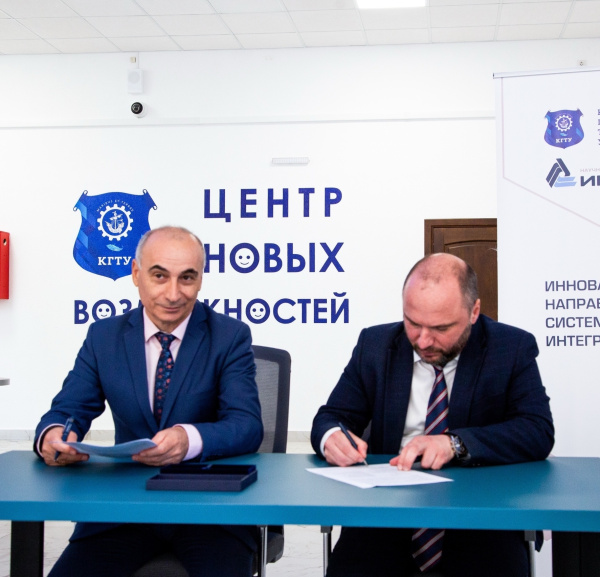
During his visit to our university, A.S. Besprozvannykh, accompanied by the Acting Rector of KSTU, A.G. Mnatsakanyan, toured the university’s new facilities—the recreation area Sea and the region’s first Centre for New Opportunities—an innovative space for youth technical and technological creativity, supporting project and research initiatives, and creating opportunities for the promotion and implementation of young scientists’ developments. The Centre comprises six experimental laboratories, an open-plan start-up studio with 32 high-tech workstations, a student co-working space, a meeting room, and the recreation area Sea for students and school pupils participating in university projects.
‘Today, technical universities are at the forefront of implementing policies on technological sovereignty, robotisation and the digital transformation of processes and production. Your university plays an important role in training personnel for our region’s agro-industrial and fisheries sectors, the maritime industry, the food industry, shipbuilding and ship repair, automation and mechanical engineering,’ noted A.S. Besprozvannykh.
The Governor emphasised that supporting young scientists and researchers and promoting their developments is a key focus of youth policy in the Kaliningrad Region and across the whole country. For two years consecutively, KSTU has received grants from the regional government to develop its research and educational infrastructure. Thanks to it, by the end of this year, the university will have a super-modern scientific and educational platform, Agrocluster, with new educational spaces, a veterinary training and practical centre, and modern university laboratories. In addition, the university received a grant of 90 million for the total refurbishment of one of its academic buildings, and scientific research is being funded in collaboration with the Russian Science Foundation.
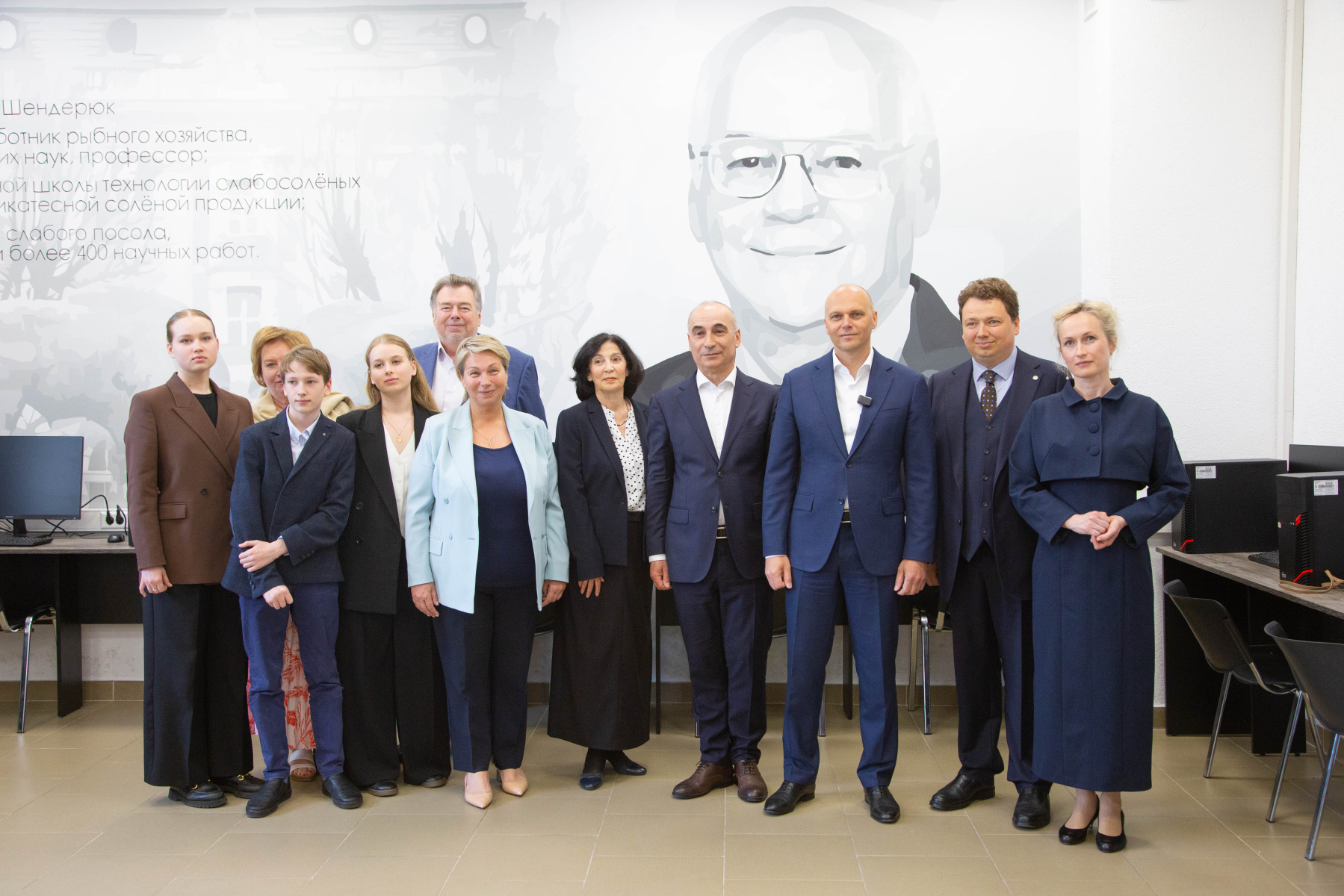
A.S. Besprozvannykh also participated in the opening of the lecture hall named after V.I. Shenderyuk—an outstanding Russian scientist in fish and aquatic organism processing technology, Doctor of Engineering Sciences, Professor, and Honoured Worker of the Fisheries Industry of the Russian Federation. For many years, Vladimir Ilyich taught at the Food Technology Department of KSTU—one of the university’s oldest departments, founded in 1915. Under his leadership and with his direct involvement, the department became a leading centre for training specialists in fish processing in Russia. The lecture hall was named in his honour in recognition of the scientist’s outstanding contribution to the development of the university, the department and the country’s fish processing industry.
The opening ceremony was also attended by the renowned scientist’s grandson, A.V. Shenderyuk-Zhidkov, First Deputy Chairman of the Federation Council Committee on the Budget and Financial Markets and Senator for the Kaliningrad Region, along with other relatives of the scientist.
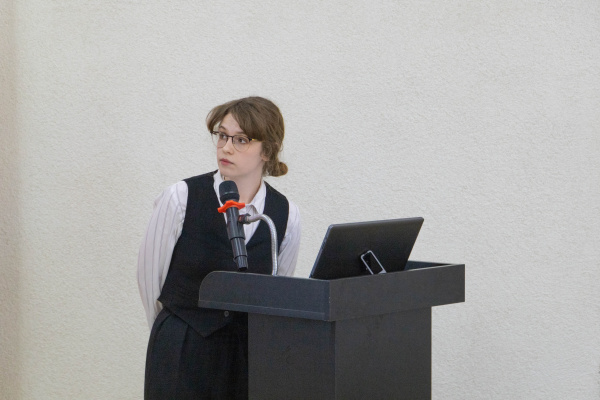
After touring the educational facilities, the regional head met with students and the university’s academic staff at the university’s Boiling Point and, in an open dialogue, discussed with those present topical issues regarding the training of personnel for the fisheries industry, the development of support measures for young people, and shared memories of his own studies at a technical university and his favourite subjects—mathematics, physics and strength of materials.
During the conversation, the students spoke about their achievements in research and sport. The governor promised to support the development of rowing and the river boat trip project, to look into organising training opportunities and providing additional sports equipment, and to consider amending the regulations governing the award for achievements in science, technology and innovation Eureka with the aim of easing the eligibility criteria for young scientists.
Particular attention was paid at the meeting to issues of supporting young families in providing them with accommodation. Young parents Alexander Menshenin and Anastasia Kochina, who were present at the meeting and had previously taken part in a meeting with President Vladimir Putin, requested an increase in the quota for the provision of social housing to young researchers with families.
‘I know how important the housing issue is; we are actively working on it and developing new tools to resolve it. In addition, I believe it's essential to set up mother-and-child rooms in academic buildings,’ noted A.S. Besprozvannykh.
During the conversation, the participants also discussed issues of ensuring food security in the region. The Governor noted that for the Kaliningrad region, unlike other regions, security is linked, first and foremost, not to the growth of local production but to the guaranteed transit of goods, because even 90% self-sufficiency in basic foodstuffs is meaningless if there is no import of seeds, spare parts for combine harvesters and other items.
‘Based on the specifics of our geographical location, we take into account the geopolitical aspects of transit pricing and the impact of sanctions and are working to address the issues of transport accessibility and independence from imported packaging materials for the fishing industry. Establishing a regional reserve of materials and refocusing on the Russian domestic market will help to improve food security,’ emphasised A.S. Besprozvannykh.