Electroenergetics and Electrical Engineering section discussed innovative topics
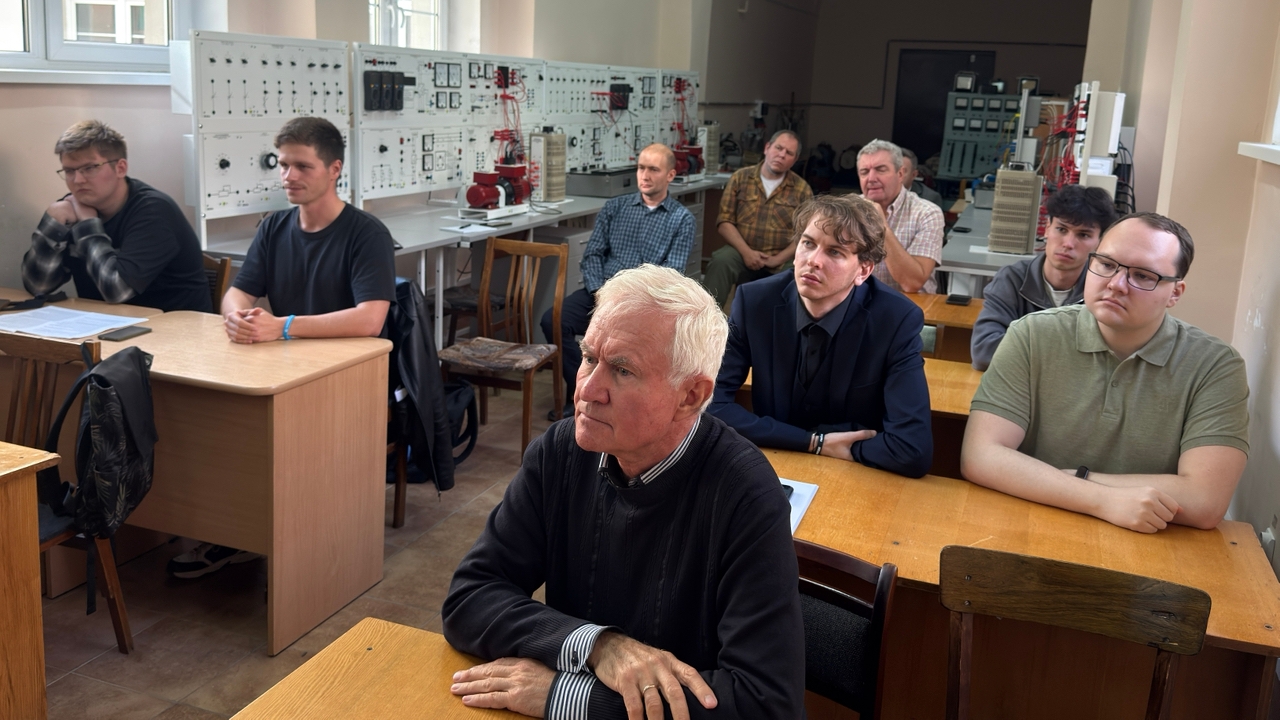
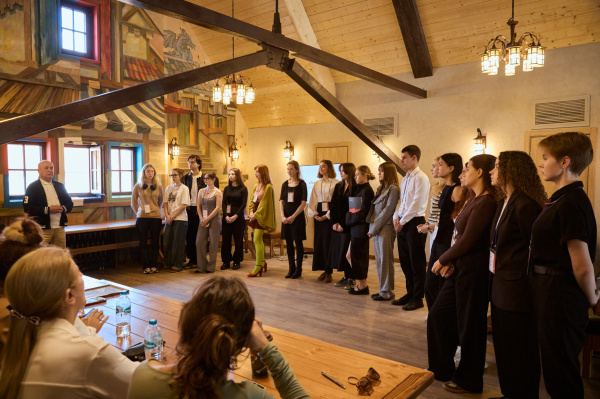
On 29 September 2026, as part of the 14th International Baltic Maritime Forum and the 24th National Scientific Conference with international participation, Innovations in Science, Education and Entrepreneurship—2026, a session of the Electroenergetics and Electrical Engineering section was held at the Power Engineering Department of KSTU under the guidance of Doctor of Engineering Sciences Professor V.F. Beley.
S.V. Gribkov, Scientific Secretary of the Committee on the Problems of Renewable Energy Sources Use of the Russian Union of Scientific and Engineering Associations, Doctor of Engineering Sciences and Honoured Power Engineer of the Russian Federation, delivered a welcoming address.
Students, postgraduate students, and lecturers from KSTU, other Russian universities, and even from the People’s Republic of China shared the results of their research. A total of 12 papers were presented, covering issues in the fields of electric power engineering, electrical engineering, electric transport, renewable energy sources and even weather control.
V.F. Beley presented a paper entitled On the Formation of a National Three-Tier Model of Higher Education in the Field of Electric Power Engineering (authors: V.F. Beley, Doctor of Engineering Sciences, and postgraduate student G.V. Kotsar). The paper sparked a lively discussion on possible ways to improve the quality of staff training, taking into account trends in the development of the global energy sector.
The speakers paid particular attention to improving the efficiency of electric transport, including through the use of renewable energy sources and energy storage systems. The following papers aroused genuine interest among the audience: Issues of Increasing the Driving Range of Electric Vehicles (author: S.V. Gribkov, Doctor of Engineering Sciences) and Wind Turbine for Energy Storage Charging in Electric Vehicles and Electric Motorcycles (authors: S.V. Gribkov, Doctor of Engineering Sciences, and A.N. Rusakov, postgraduate student) Evaluation of Energy Storage System Efficiency under Stochastic Charging Loads and Limited Grid Capacity (authors: M.S. Kharitonov, Candidate of Engineering Sciences, and R.V. Zubavichus, postgraduate student).
The conference attendees’ attention was drawn to a presentation by a Russian-Chinese research group (authors: S.V. Gribkov, Doctor of Engineering Sciences, N.B. Dyachkov, Candidate of Engineering Sciences, I.V. Yudaev Doctor of Engineering Sciences, and Shuai Yongzhang) Weather Correction System Based on Renewable Sources and Its Functional Specifics, dedicated to research into the possibility of influencing the atmosphere through local ionisation in order to induce precipitation. The audience highly appreciated the work.
Reports Analyzing the Impact of Microgeneration on Distribution Network Performance in Low-Rise Residential Areas (authors: M.S. Kharitonov, Candidate of Engineering Sciences, and D.A. Arkhip), Opportunities for the Integration of Artificial Intelligence into Russia’s Renewable Energy Sector (authors: S.A. Pankratov, Candidate of Engineering Sciences, A.V. Dyomin, and E.E. Komarova), and Dual-Loop Active Power Regulation of Photovoltaic Installations for Maintaining Power Quality and Grid-Inverter Reliability (author: D.K. Kugucheva) highlighted important issues in distributed and renewable energy and received positive feedback.
The study of higher harmonics was the subject of presentations by B.L. Geller, Candidate of Engineering Sciences, on Analysis of the Harmonic Composition of the Input Current of Three-Phase Rectifiers, and by V.F. Beley, Doctor of Engineering Sciences, and postgraduate student K.V. Korotkikh, a postgraduate student, entitled Reduction of Higher Harmonics in Power Supply Systems under Conditions of Increasing Non-linear Loads.
The audience showed great interest in the papers Development of a Single-Phase Ground Fault Protection Device Prototype (authors: I.E. Kazhekin, Candidate of Engineering Sciences, and E.S. Starostin, postgraduate student) and Some Results of the Design of the System-Forming Network of the Chukotka Autonomous Okrug Power System (authors: V.F. Beley, Doctor of Engineering Sciences, postgraduate student G.V. Kotsar, and A.M. Plotnikov).
Following the session, the committee selected the three best papers.
- Weather Correction System Based on Renewable Sources and Its Functional Specifics.
- Evaluation of Energy Storage System Efficiency under Stochastic Charging Loads and Limited Grid Capacity.
- Some Results of the Design of the System-Forming Network of the Chukotka Autonomous Okrug Power System.
According to the section’s work results, all papers were highly rated and made a positive impression.