Smart Week took place at the Institute of Agricultural Engineering and Food Systems
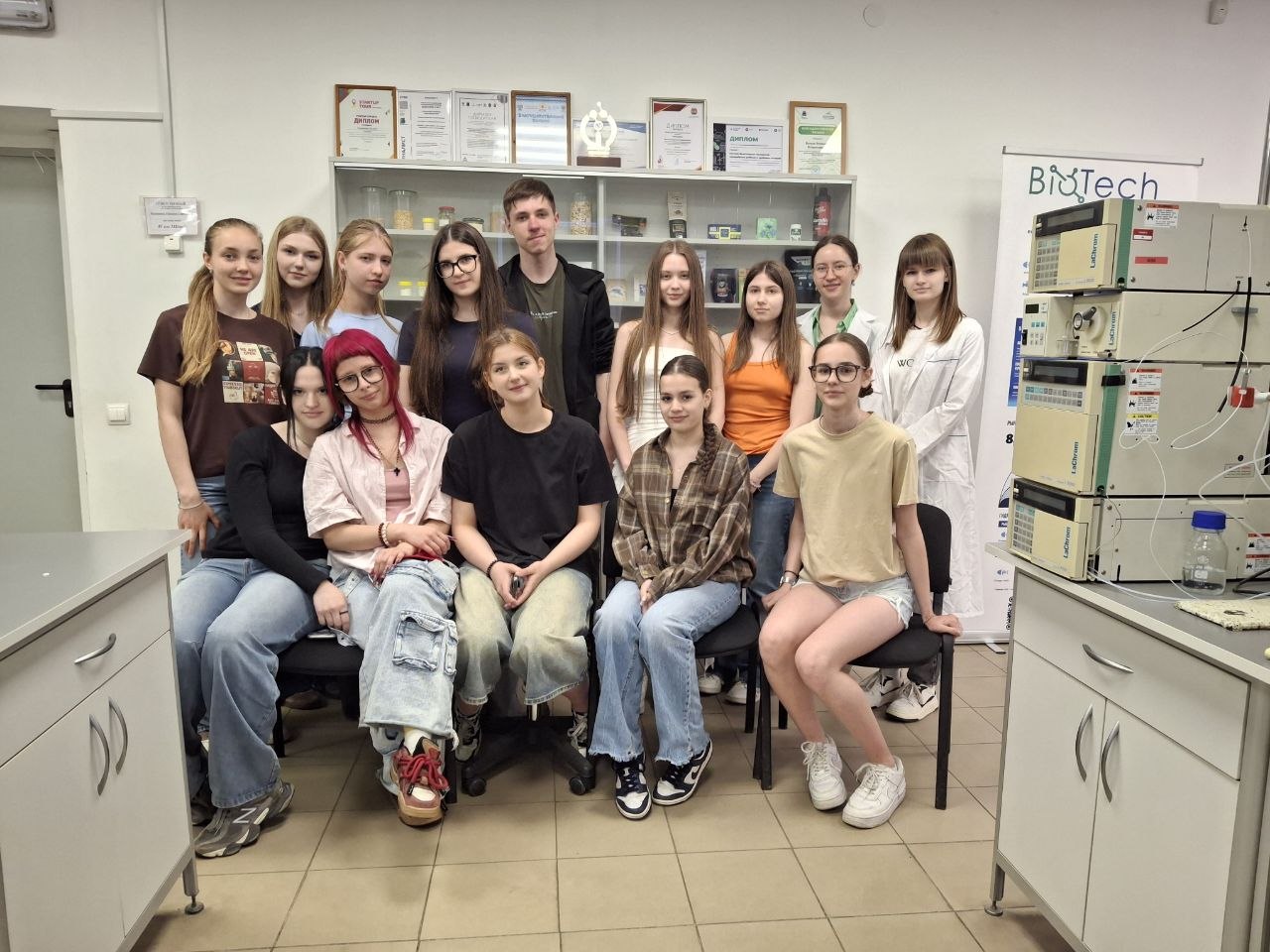
From 1 to 5 June, the Institute of Agricultural Engineering and Food Systems hosted its traditional summer technical training session for 30 tenth-grade pupils from Municipal Autonomous Educational Institution Secondary School No. 33 and Municipal Autonomous Educational Institution Grammar School No. 40 named by Yu. A. Gagarin. Each of the five days included an introduction to the Institute’s study programmes.
On the first day, the pupils tried their hand at being food technologists and restaurant industry technologists (Food Technology Department). They were told about the theory of taste, colour and aroma in food. First, the pupils had to assess their sensory sensitivity and learn about sensory illusions; they then studied methods of leavening dough and prepared and tasted several varieties of enriched biscuits.
Next, they were introduced to food biotechnology (Food Biotechnology Department). The students learnt about the main areas and prospects for the development of biotechnology; they studied one of the biotechnology objects – the blue-green microalgae spirulina; they received biodegradable films for food products; and they prepared and tasted lactic acid ice cream made from milk that had been pre-fermented with lactobacilli.
On the third day, the pupils became bioengineers (Chemical and Analytical Resource Centre). The schoolchildren visited the research laboratories with great interest; they learnt about the concept of DNA and its structure through games, extracted DNA from onions, and gained practical skills in determining the sugar content in juice and juice-based drinks using paper chromatography.
The following day, the pupils felt like agronomists and urban farmers (Agronomy and Agroecology Department). The schoolchildren learnt about the prestige of agricultural professions, noted the innovative trend in agribusiness – city farming – and participated in interactive sessions and masterclasses on creating closed ecosystems and their application in space research.
On the final day, the students learnt more about zootechnicians, veterinary and sanitary experts, and veterinarians (Department of Veterinary Medicine and Animal Husbandry Technology). During a tour of Kaliningrad Zoo, the pupils noted interesting facts about the animals’ lives and saw the zoo through the eyes of the staff — how the veterinary service organises the examination and treatment of animals, and how animal keepers arrange for the animals’ living conditions to be as close as possible to their natural habitats, including providing feeding regimes for the zoo’s animals according to their species and age.
After the summer smart holidays, schoolchildren and teachers provided the Institute of Agricultural Engineering and Food Systems with vivid emotions and appreciative feedback, and their participants received commemorative certificates. We would like to thank all the lecturers and staff at KSTU who participated in conducting the introductory classes for our future applicants.