The First Vice-Rector of KSTU spoke about the university’s digitalisation projects
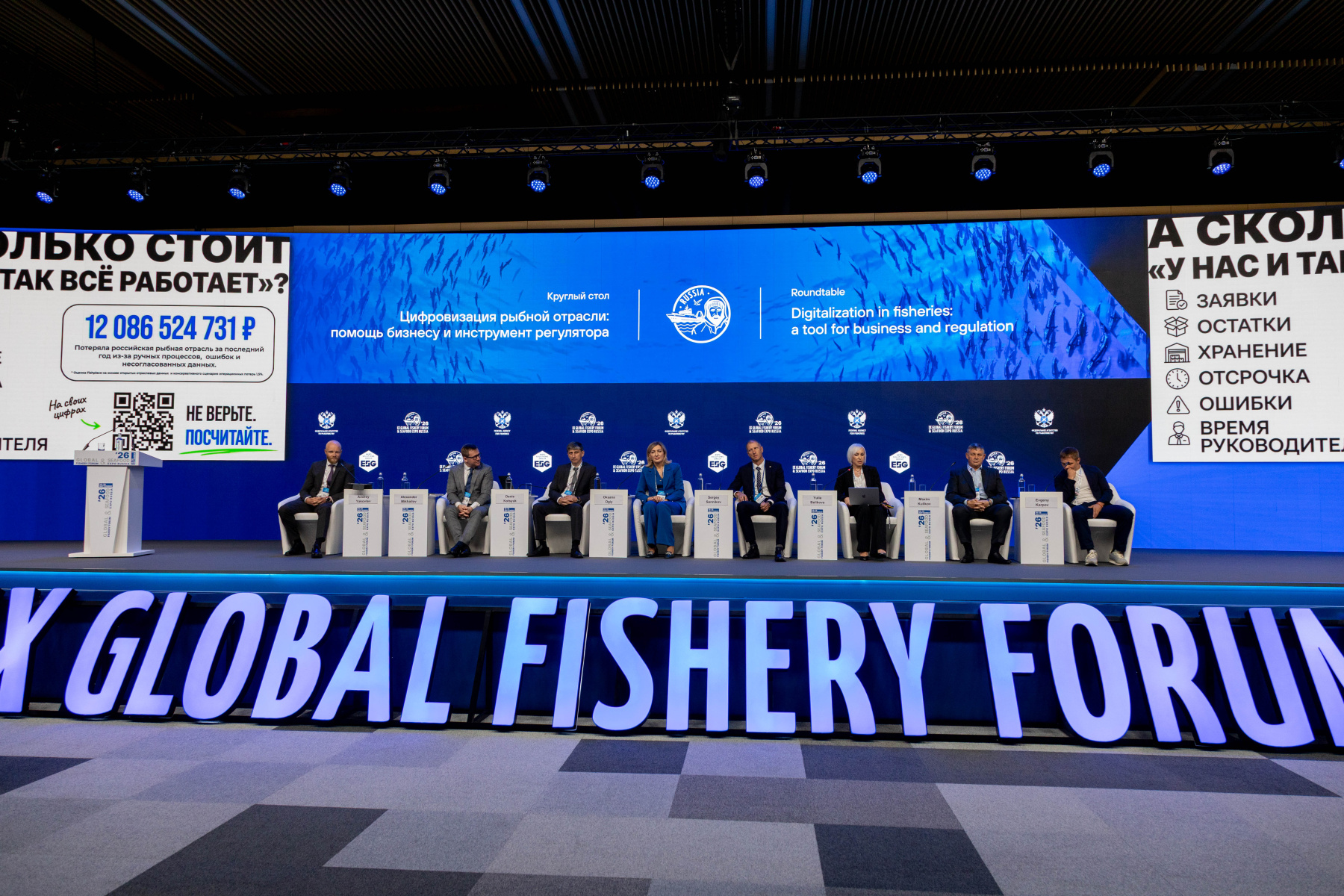
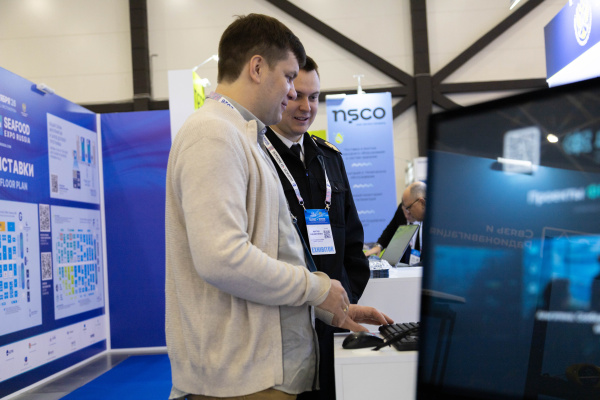
The first event of the Global Fishery Forum & Seafood Expo Russia started in St. Petersburg — a round-table discussion entitled Digitalisation in Fisheries: Business Support and a Regulatory Tool.
Seven leading experts in the field of digital technologies are taking part. A.V. Yakovlev, Deputy Head of the Federal Agency for Fishery, moderated the round table.
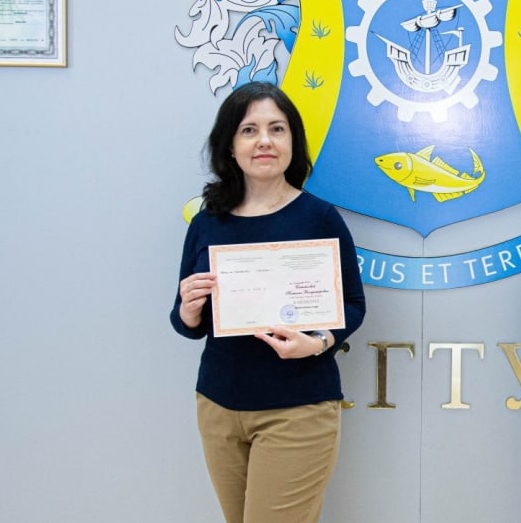
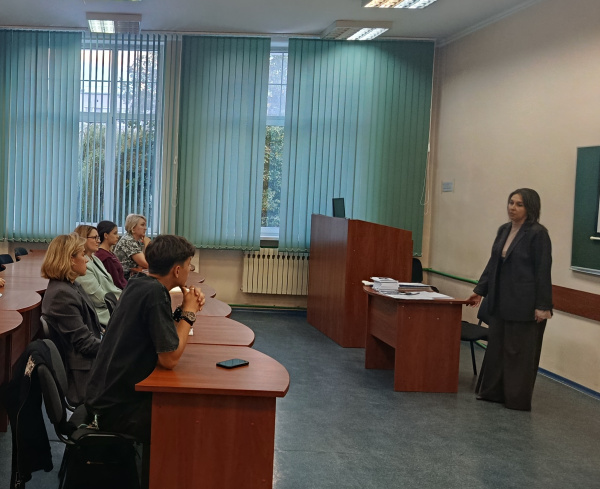
Alongside representatives from educational institutions, fishing companies, and digital technology specialists, O.G. Ogij, First Vice-Rector of KSTU, is participating in the round table panel.
She discussed with colleagues the effectiveness of modern marine and aircraft unmanned systems for monitoring aquatic biological resources. Oksana Gennadievna told the large audience about our university’s achievements in this field.
In particular, in her presentation, she spoke about the development of unmanned systems and technologies at KSTU to meet the industry’s needs. Research is being conducted in two areas: unmanned marine and unmanned aircraft technologies.
According to her, among the unmanned maritime systems developed at our university, the Small Unmanned Trawling Catamaran and the Autotrawl hardware and software complex have the highest level of technological readiness.
The First Vice-Rector also conducted a comparative analysis of the Autotrawl hardware and software complex with its foreign equivalents from Norway, Spain, Iceland, Denmark, and Turkey. The analysis showed that the system’s key characteristics are comparable.
The First Vice-Rector spoke about the prospect of installing Autotrawl peripheral and computing modules on vessels in the fishing fleet.
Furthermore, the university is implementing a new project in unmanned aircraft systems and technologies. KSTU is developing water area monitoring platforms based on the Geoscan Gemini—a compact, domestically produced quadcopter-type unmanned aerial photography system. Scientists from KSTU are developing specialised software for the automatic processing of data collected by a multispectral camera.
The university’s administration is constantly developing the research infrastructure and creating opportunities for young scientists while they are still students. In April, KSTU opened the Centre for New Opportunities, which comprises several experimental laboratories for young researchers.
There are laboratories for unmanned systems, digital twins, training simulators, big data and neural control, and engineering aquaculture, as well as experimental design work in electrical engineering at the Centre. In addition, there is a start-up studio with 32 high-tech workstations.
The center is ready to fulfill orders for equipment development and services for the fisheries industry and agro-industrial enterprises.